Show Planes in Solidworks Drawing
If I were stranded on a desert island, these are the x SOLIDWORKS tips I hope I had with me.
Only kidding. What I mean to say is, hither are 10 tips I think every SOLIDWORKS user needs to know.
1. The Command Search – Speedily Find and Activate Any SOLIDWORKS Control
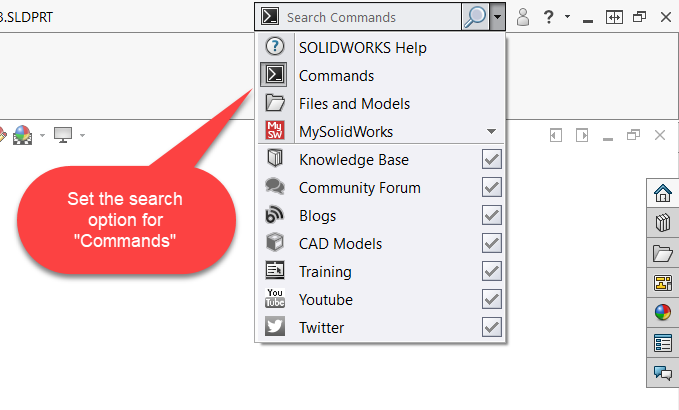
This is my favorite of the tips in this list, and the one I share with every single educatee to whom I teach SOLIDWORKS. The control search is a quick way to launch a command. Instead of digging through menus searching for a command you lot may only use in one case a month (or less), just get-go typing in its name and launch it from the list of commands.
You can too customize your UI by dragging and dropping the icons to your command director. It's a quick way to add together some customizations on the wing, in case you might utilize that aforementioned command a few more times.

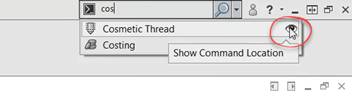
And if you want to know where a command resides, you can utilise the command search to guide your mouse to the control's location and point to it with a large red pointer that you tin can't miss. For this, all you do is click the eyeglasses next to the control to see where it is in one case and for all.
2. Context Carte du jour – How to Get information technology Back When it Disappears
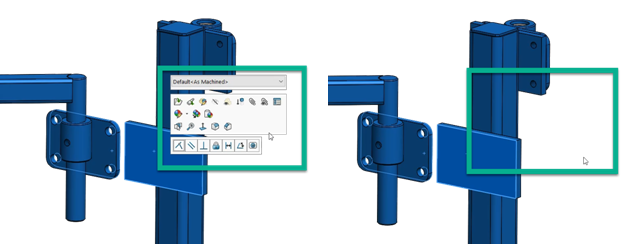
The context card is the box that pops up next to your mouse with a bunch of buttons you tin can click. It'southward called the context bill of fare considering it'll look unlike depending on the context of the selection. All ability users take advantage of the context menu because it brings any relevant command right to your mouse, enabling you to model super-fast.
But what most ability users don't know is how to get it back when it disappears. The context menu will disappear if your mouse doesn't movement direct to it. It'south sort of very needy and very sensitive in the sense that if you don't pay attention to it, it seems to become away mad.
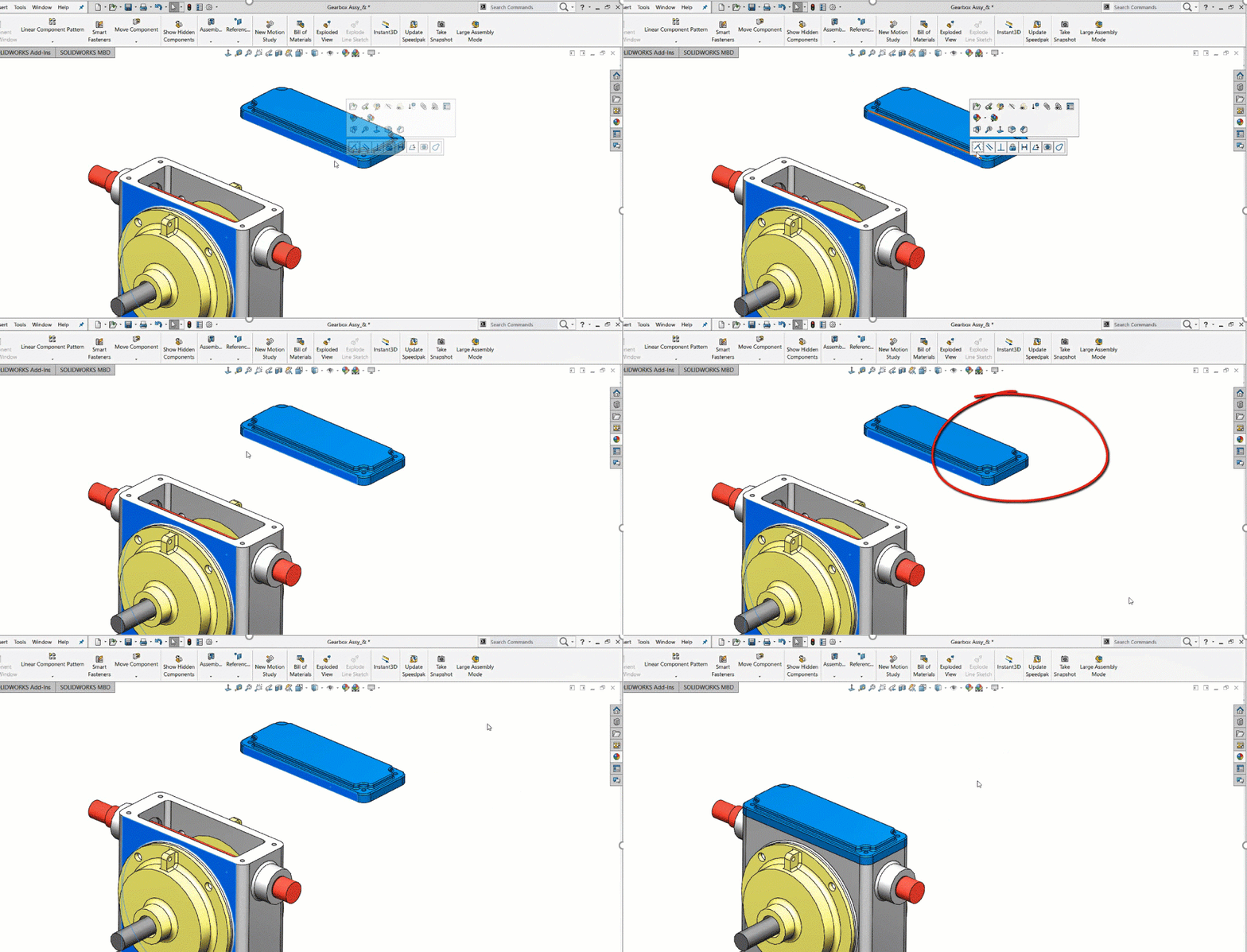
We've all been in the situation where we're modeling, and we hesitate for just an instant and the context carte disappears. The good news is that it doesn't disappear for good. You tin go information technology back by pressing the control fundamental. Only make certain your mouse is positioned in the surface area where information technology originally appeared, and it will reappear.
iii. S-Fundamental – The Only Hot Primal You Demand to Remember
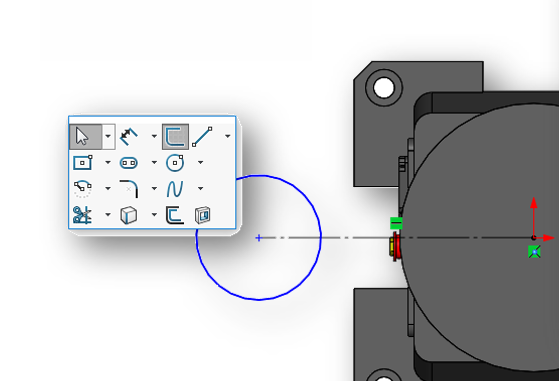
In my stance, the best way to model in SOLIDWORKS is to accept one hand on the mouse and the other on the keyboard fix to press the "South" key. When you press the "Due south" central you lot launch a customizable brusk cut bar that brings a set of commands right to your mouse. This is the simply hot central you need to know, because with it you tin quickly access dozens of commands. These curt cut bars are different depending on the modeling context – sketch, part, associates or drawing.
What makes this model technique so fast is that you'll never hesitate when you think about your hot keys. Normally, you waste precious seconds thinking or even positioning your hand to hitting the desired hot key. Instead, just recollect this 1 and your encephalon can focus on modeling. Endeavour it out, I'one thousand sure you'll agree this is the fastest way to model only well-nigh annihilation. Also, it'due south a short cutting for activating the command search (see tip number ane).
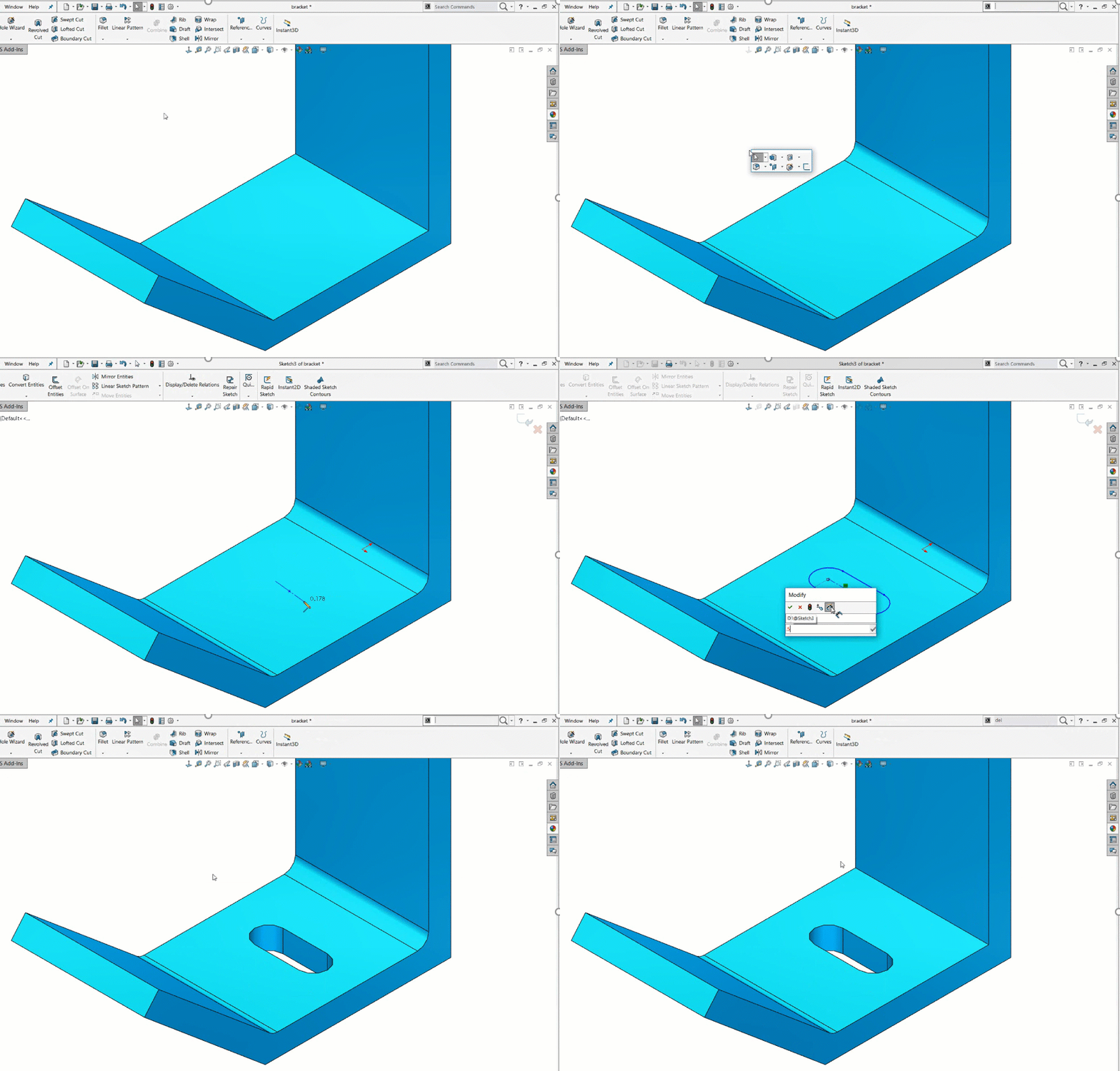
4. Height Level Assembly Filter – E'er Open up the Right File
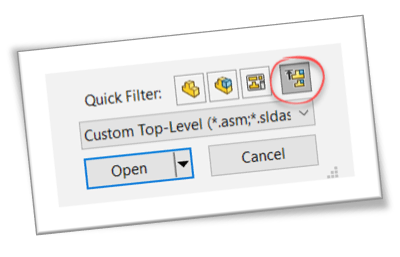
When y'all're opening files in SOLIDWORKS, it can sometimes be tough to tell which one is the acme-level associates. Ane common trick is to filter for assemblies and pick the largest one, but this isn't always going to be the top-level assembly. This is considering there is data embedded inside SOLIDWORKS files, such as simulation studies, pictures or even virtual components.
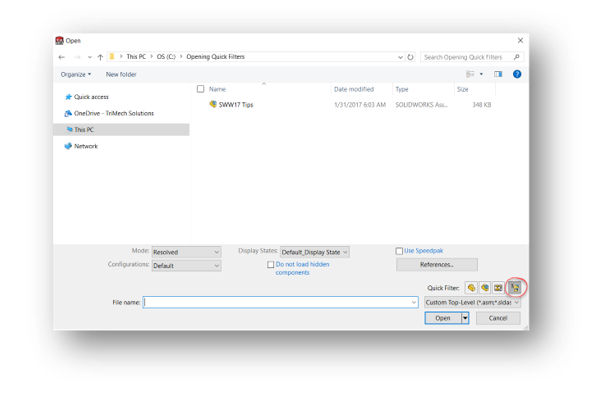
Past using the quick filters in the lesser right corner of the open dialog, you can quickly filter for the top-level assembly. This works by using file references to effigy out which assembly is the top-level assembly.
5. The Biad – Dimension Angles Without Construction Geometry
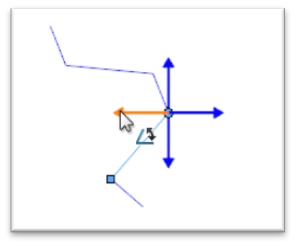
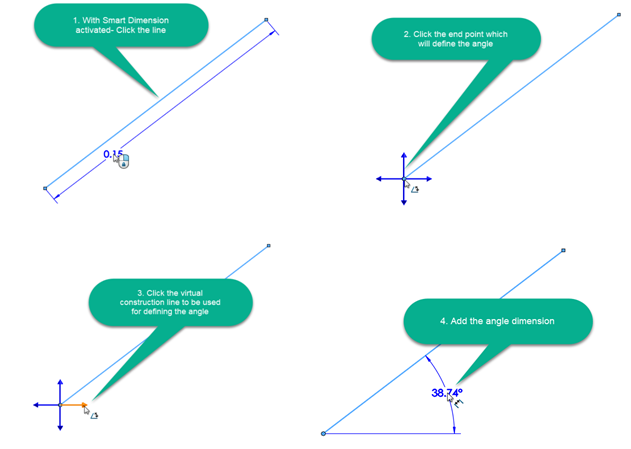
The biad is a proper name I fabricated up for the 2D triad introduced in SOLIDWORKS 2015. They call information technology enhanced angle dimension capability. With the biad, yous can create an angle dimension for whatsoever line in a sketch or 2-D drawing without referencing any other geometry. This means you don't have to draw whatever construction geometry—you but employ the line itself and imaginary lines to define the angle.
The biad appears with the dimension tool activated, and afterwards a special two click sequence. Outset you lot click the line segment, and and so the stop point. It's that easy. With the dimension tool active you click the line, and so the end bespeak which volition anchor the dimension; you then have four options of imaginary lines from which you will measure the bending dimension.
6. Drag to Add Reference Planes – Add Reference Planes On the Wing
When you want to add together a reference plane, all you have to practise is hold the command key and drag away from an existing airplane. This will immediately add a new reference plane parallel to the existing airplane. The trick here is to, with the control key pressed, find the spot on the existing program where the cross symbol appears (the aforementioned equally the pan arrows in SOLIDWORKS). This spot is typically about the perimeter of the existing aeroplane.
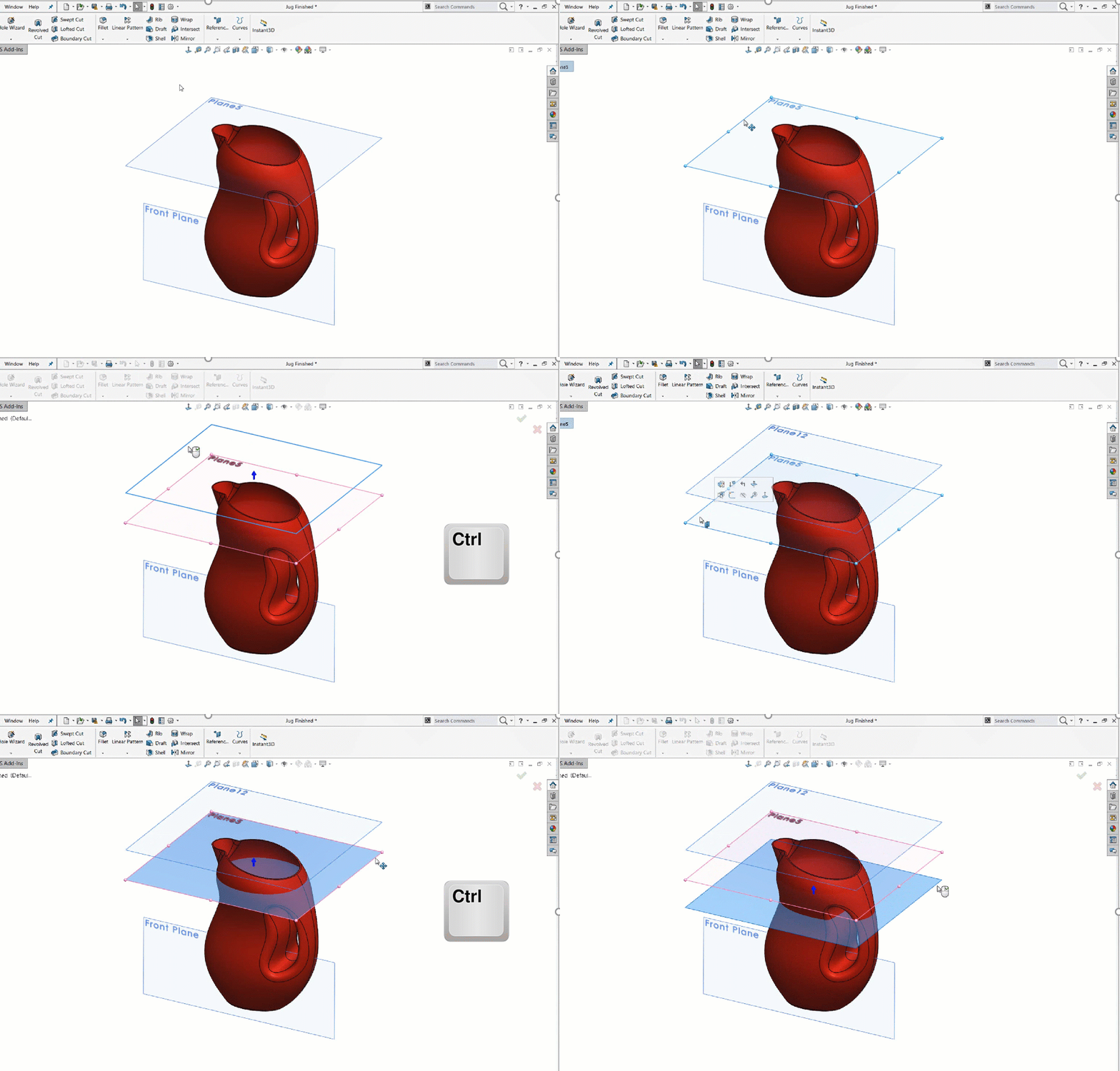
This trick is great if yous need another airplane off in space and the position doesn't need to be exact. If it needs to be exact, you can ever go in and modify its position.
seven. Normal To – More But Front and Back, But You Can Customize Your Orientation

With the "normal to" command, you can orient a face up so you're looking at information technology from a correct angle. If you want to flip information technology around and look normally to the other side, you click information technology again. But even power users may not know that you can customize the orientation of "Normal to" by defining the vertical management.
This works past selecting a 2nd face before clicking "Normal to." You concord the command central and select the face up you lot want to await at, and then yous select a second face which volition ascertain the vertical or "upwards" orientation.

8. Disable Auto-Relations – Gratuitous Yourself From the Clutter When Sketching
When yous're sketching, at that place is a lot of dynamic feedback happening. Normally, that's great; y'all e'er know if you lot're vertical, horizontal, parallel, perpendicular and then on. But this autosnapping functionality can sometimes get in the way—and even be downright annoying.
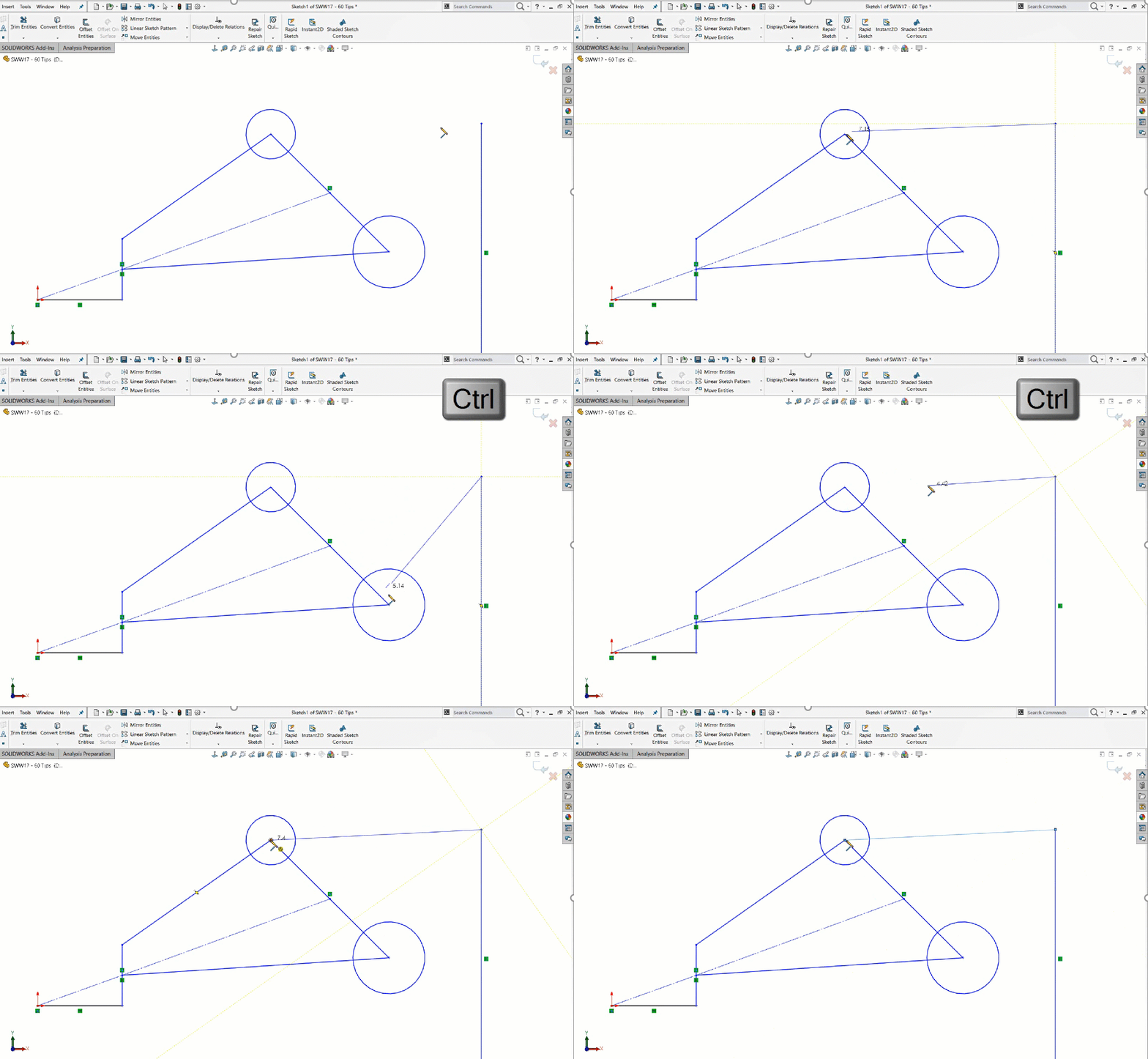
To dynamically turn this off, merely hold the control key while sketching. This will turn off the autosnapping functionality, giving you the freedom to sketch whatsoever and wherever you want. Sketching goes back to normal when you release the control primal.
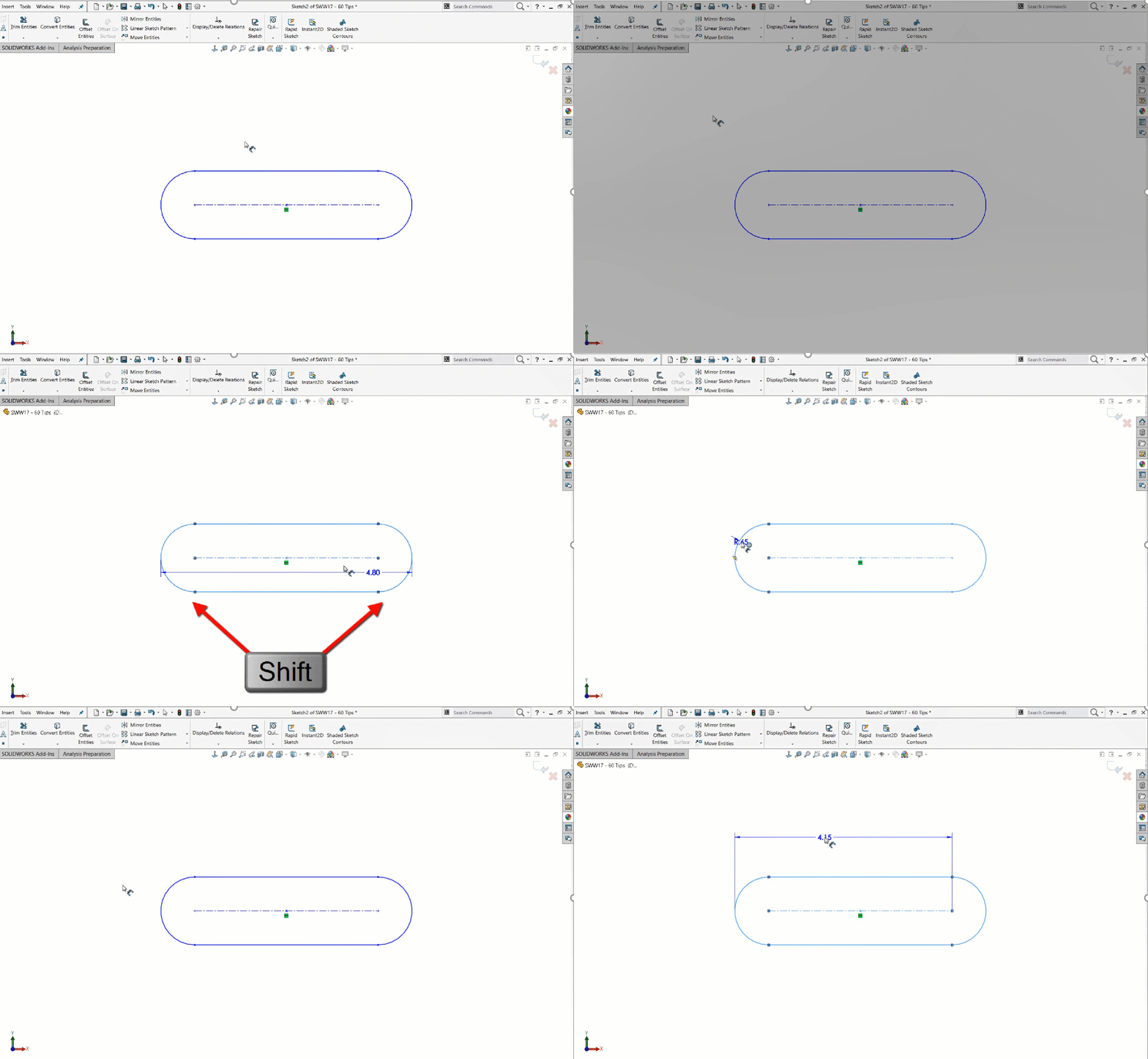
9. Dimension to Tangency–Override the Default with the Shift Primal
When dimensioning to curved entities, the default behavior is to dimension to its center. By holding the shift key when you click a curved entity, you will be adding a dimension to its tangency.
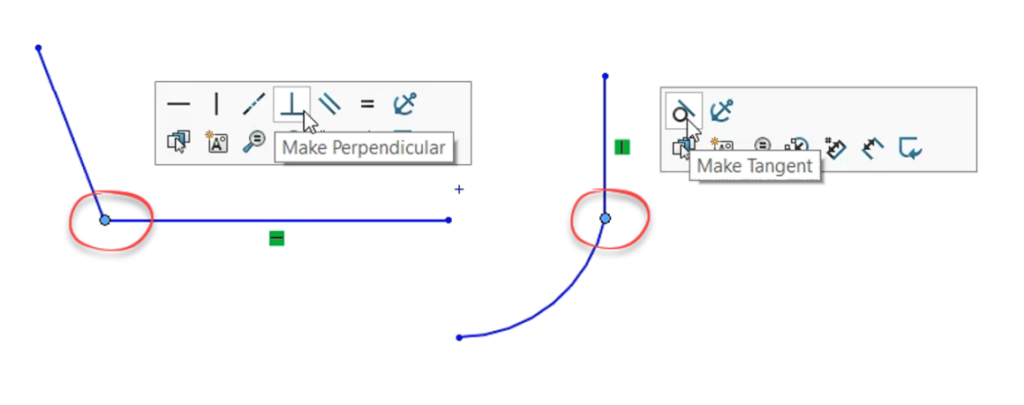
ten. Sketch Relations –Add together Relations equally Quickly as Possible
A welcome feature added just a few years ago was the power to add sketch relations to shared or common vertices. This means yous no longer need to use the command key to select two segments to add a relationship at their intersection like perpendicular or tangent. Now yous tin can add relations to the vertex, which takes no fourth dimension at all.
Those are my Pinnacle x tips I think every SOLIDWORKS power user should know and use on a regular basis. Obviously, in that location are many, many more tips to aid model ameliorate in SOLIDWORKS, just these are but the 10 I'd desire to have with me on my desert island.
Source: https://www.engineersrule.com/the-solidworks-tips-i-cant-live-without/
0 Response to "Show Planes in Solidworks Drawing"
Postar um comentário